
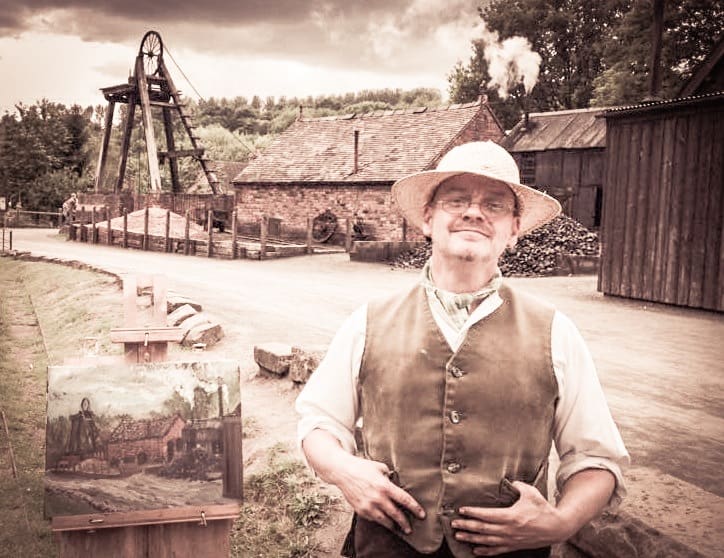
I’m sure everyone fantasises about going back in time. At Blists Hill, Ironbridge, you can do it for real, and step into a Victorian Town, full of the sights, sounds and smells of 1890s Industrial England.
I spent a week in Ironbridge as a Victorian Artist, kindly arranged by Mr. Bartlett the bank clerk (amongst many other roles). Arriving and being fitted for a costume in the wardrobe department, I felt rather like “Mr. Benn” in David McKee’s TV series. The real frisson was stepping through the discreet gateway into the street of the town, and suddenly there I was, back in time, amongst the workers and inhabitants, all in costume with jobs to do: chemists, doctors, printmakers, butchers, bakers, candlestick-makers (really!). A week of ales and morris dancing and friendship…of lamp-posts, horses and carts, sing-songs in the pub, waistcoats and hats, and lashings of ginger-beer. I feel as though I have spent a week in Narnia!

My purpose was to represent the role of an artist during this period of history. As with industry, this was a revolutionary time, simply because of a humble invention: the metal paint tube. Invented in 1840, oil paints were not really portable before then, and watercolours were the main materials used on site; oil paints were mixed from pigments, with oils, stored in pigs bladders and used principally in studios, on large canvasses over many weeks. But tubes transformed that. Widely available from the 1860s onwards, they enabled artists to paint directly from life, conveniently and simply.
I found, and took along, genuine Victorian paint sets, both watercolours and oils. They are beautiful things… the watercolours are barely touched.

Portable easels were created at this time, and the term “en plein air” (“in the open air”) was adopted as a new movement was born in France: Impressionism.
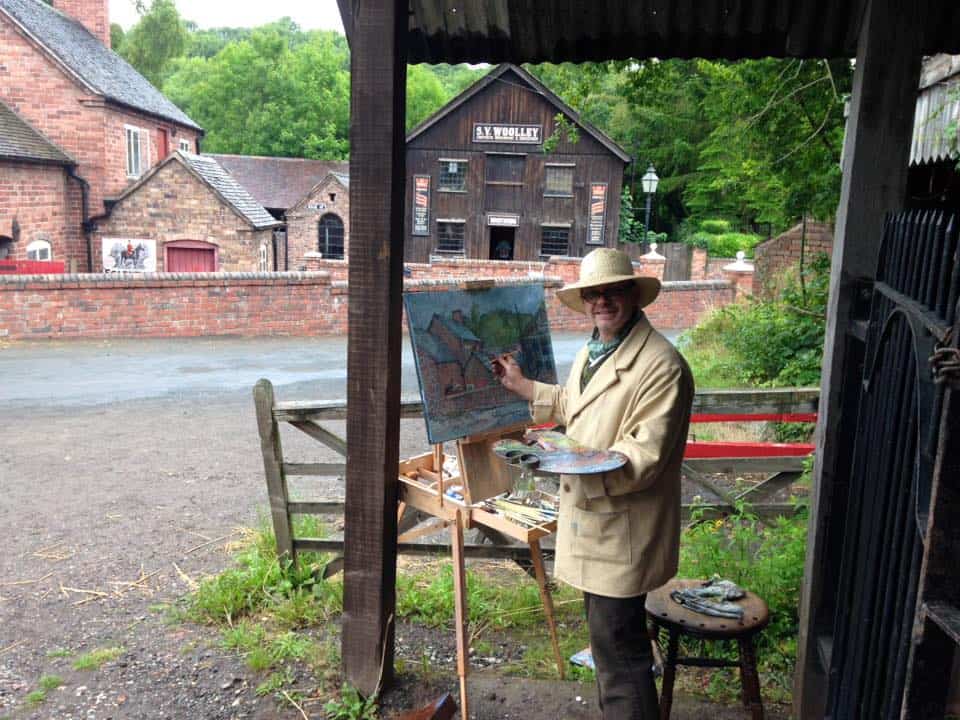
Here’s my easel, surrounded by ginger beer bottles! The Chelsea buns were good too!
I don’t think it is too much of an exaggeration to say that without tubes, Monet, Renoir, van Gogh and co. would have created very different pictures. In England, Whistler, Steer, Sickert, Singer-Sargent followed on. It was a wonderful freeing time for art, and quite the opposite approach of those other Victorians: the Pre-Raphaelites.
Over the week, I set up my easel in assorted locations and became one of those English Impressionists of 1890. And there is plenty of documentation that artists came to Ironbridge, home of the industrial revolution, to see for themselves the effects on the English landscape, scenes of smoke and skies and storms and light! These days it is rather more sedate.
I have not used oils for years, but have always wanted a reason to return to them. And this was it. I can’t say these are the greatest paintings in the world, but I really enjoyed creating them. I had no brief, no deadline, no pressure from publishers. I could just observe and attempt to capture, on canvas, what I saw. It was hard work – a lot of concentrating! And of course I had to remember I was playing a part for the public who loved to see the pictures progress. Painting live in front of people creates it’s own pressures, as does painting in the open air. Changing light, changing weather, and sore feet were occupational hazards. But do you know what? I LOVED it. Every minute of it.
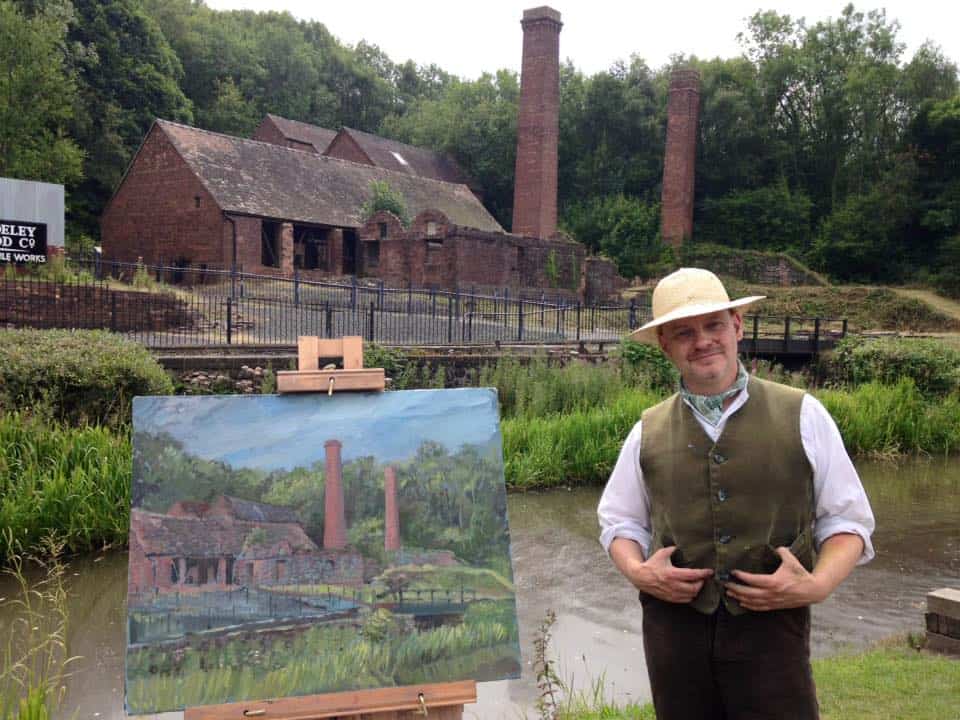
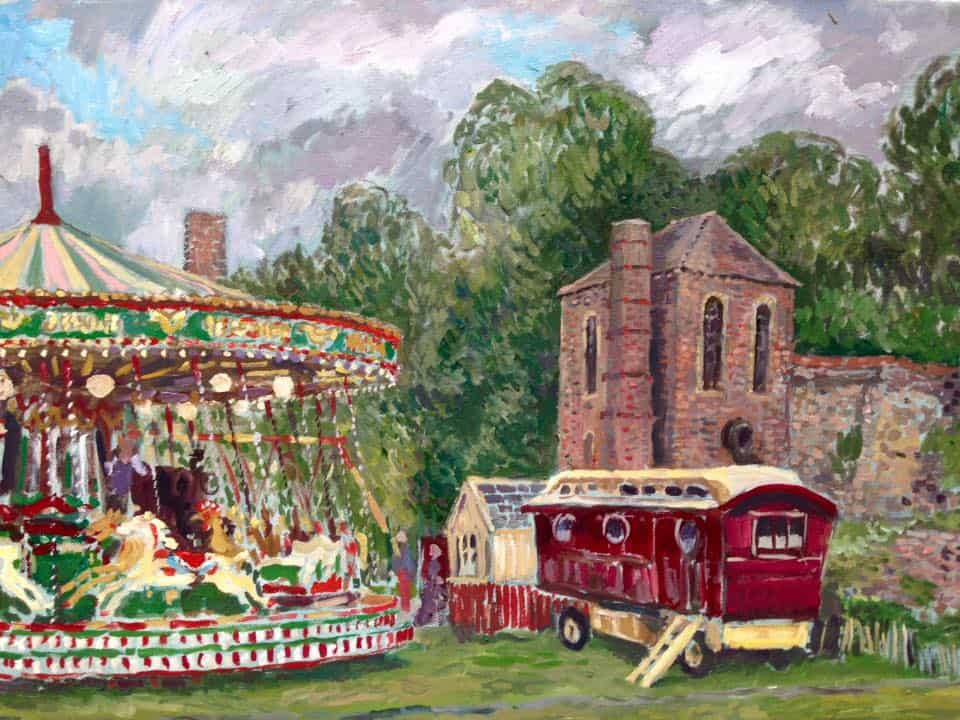
The different scenes – old brick factories, street scenes like a box of Quality Street, the Carousel (that was especially tricky)… there was inspiration at every turn, and I feel I have hardly scratched the surface.
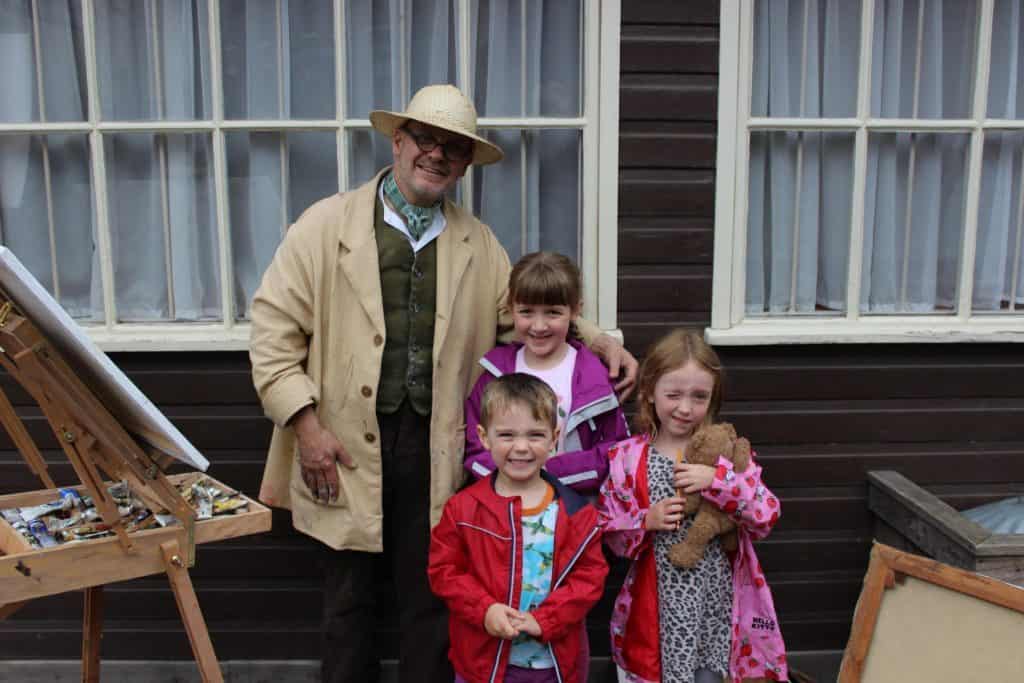
I met so man wonderful people too – the local Victorian policeman, the extraordinary Miss. Burke – the very strict but very funny school-teacher (actress Gill Jordon), and so many others; behind the scenes, the wardrobe department and all the people I met were lovely and welcoming. And of course, the visitors to the museum, who were very kind and complimentary.
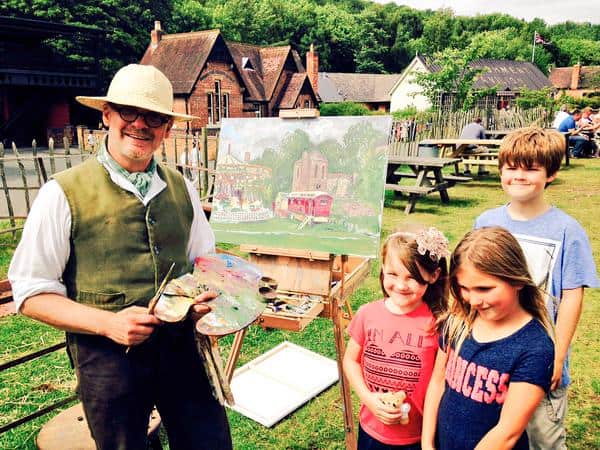


It was a week of absolute enchantment. I must also mention my B&B, which has the best views I’ve ever had from a guest house, looking directly onto the historic iron bridge (England’s first such structure, cast in nearby Coalbrookdale in 1779) that gives the town it’s name; it was fabulous to watch the mist snaking along the gorge in the morning. And the loveliest hostess too: Julie-Ann – thank you for making my stay so much fun (details here: https://www.airbnb.co.uk/rooms/4492399?s=dsOM).
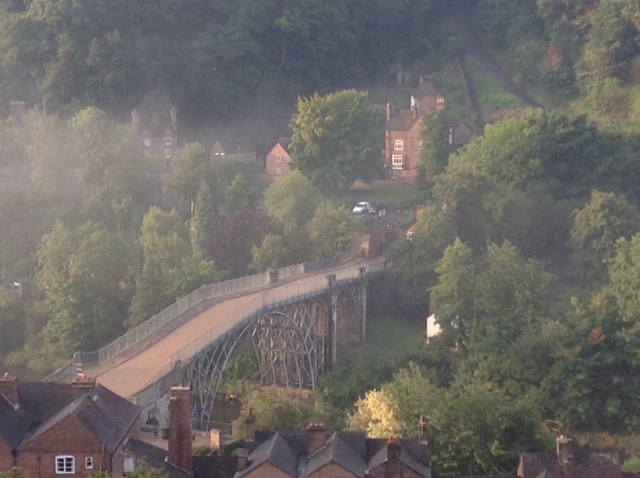
I very much hope I will be invited back. Meanwhile here are some pictures… Enjoy!
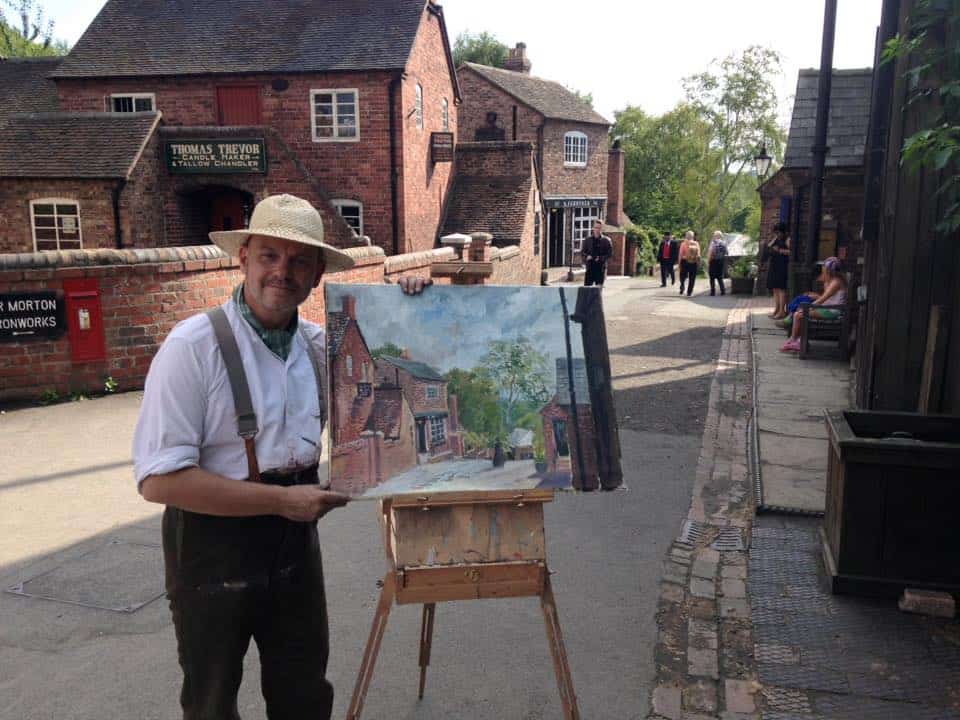
Here I am painting another view!
A Rainy day at Blists Hill:

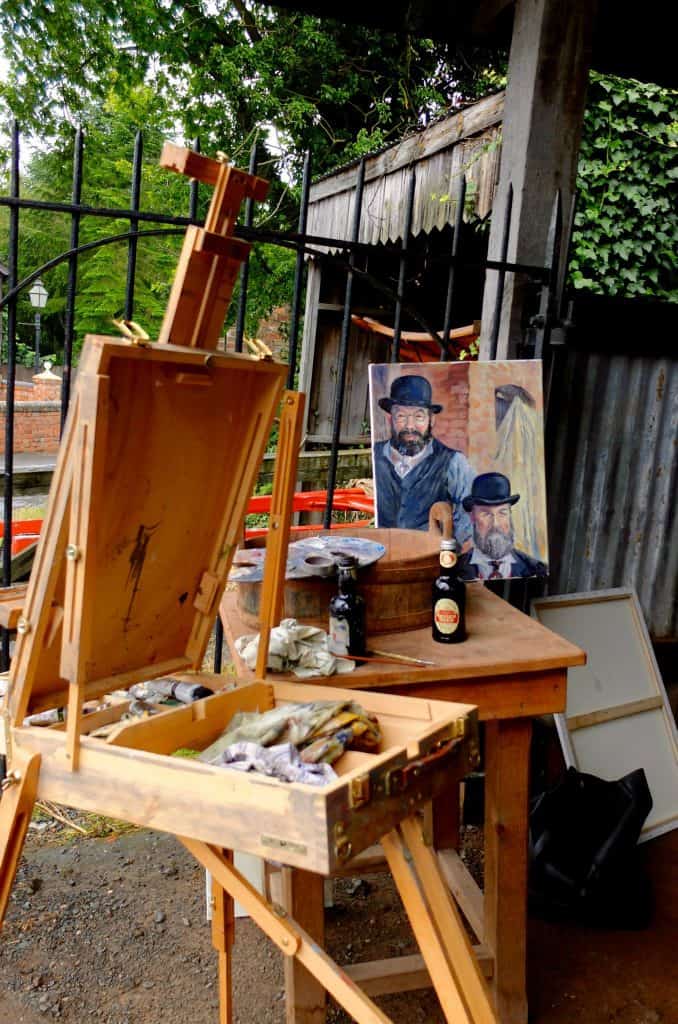
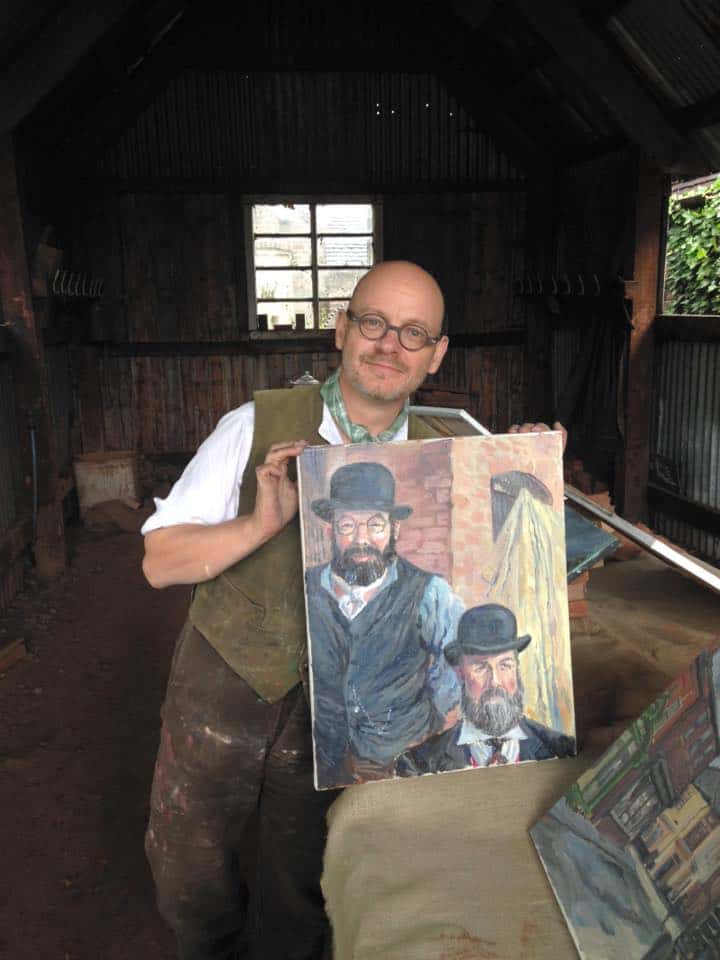
On the last day I attempted a portrait of the two Mr. Bartletts!
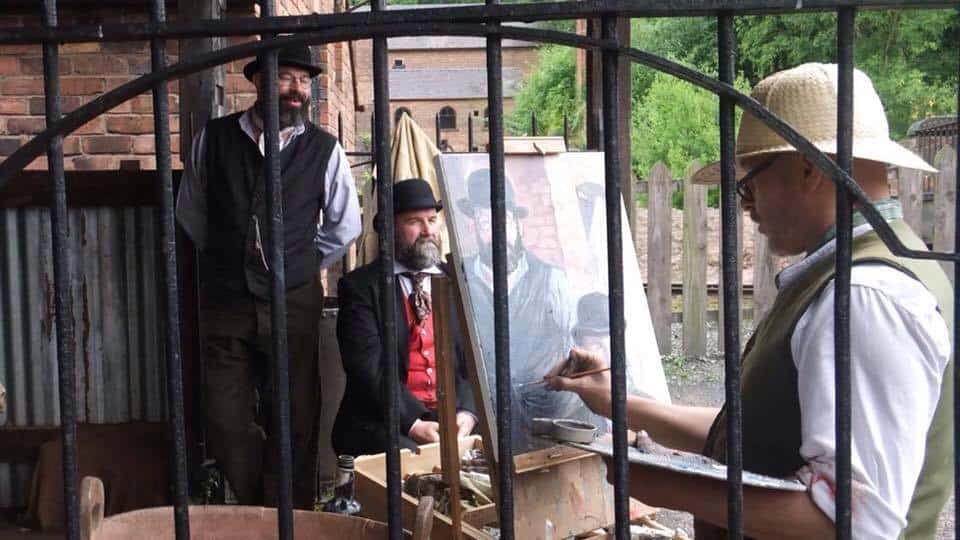
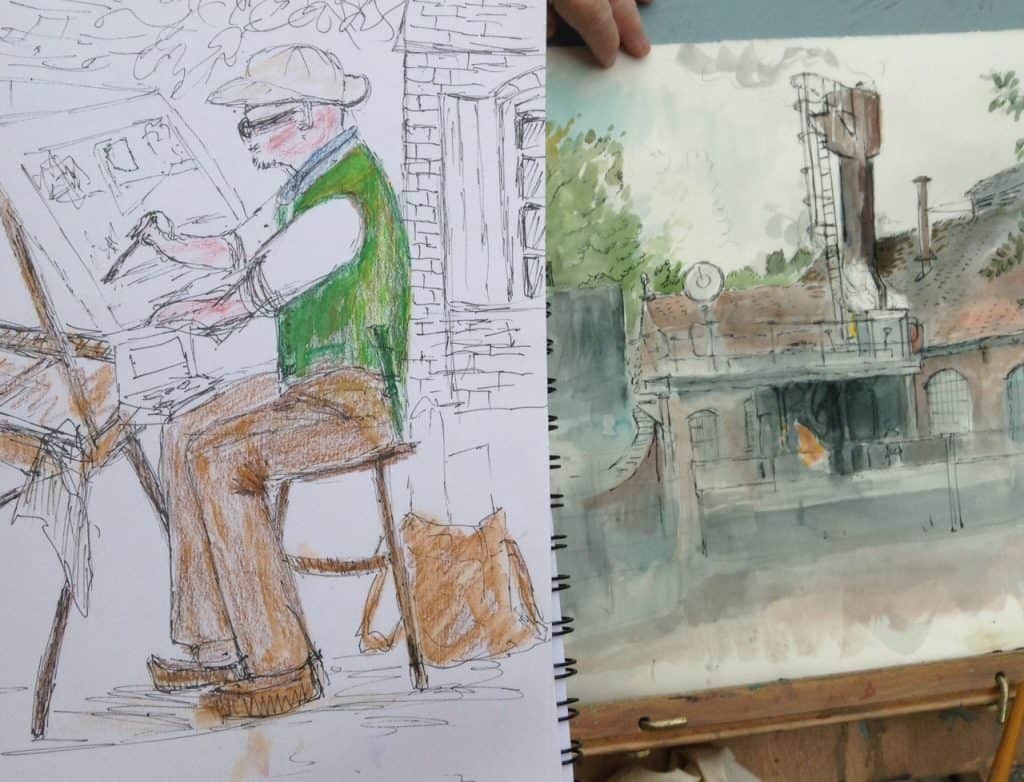
Another artist sketched me … as I sketched the old furnace…
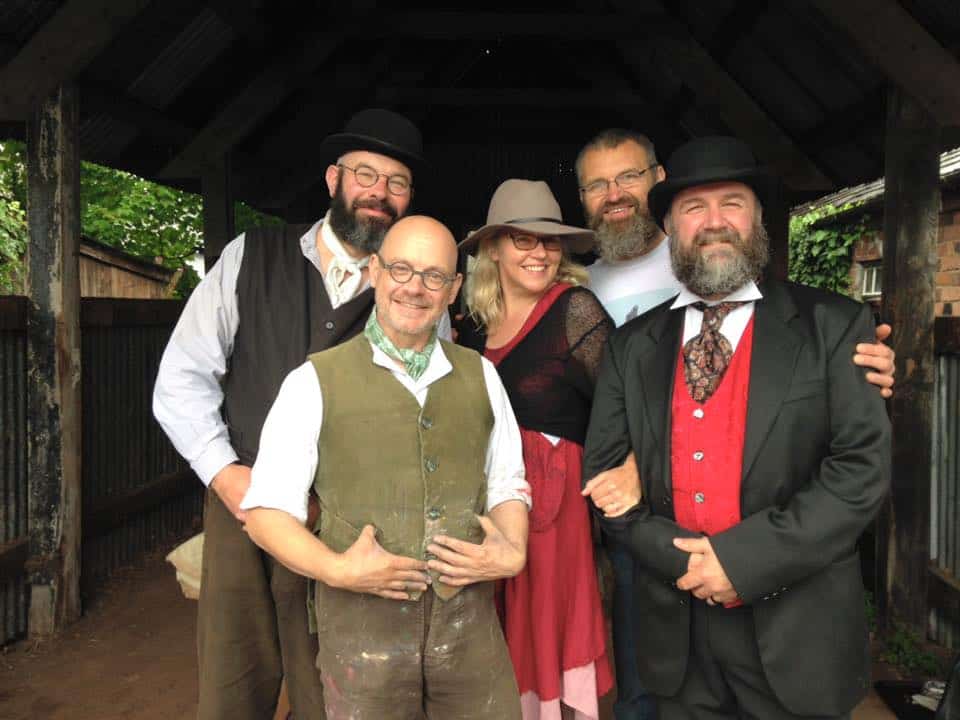
Some of the lovely friends I made at Blists Hill…
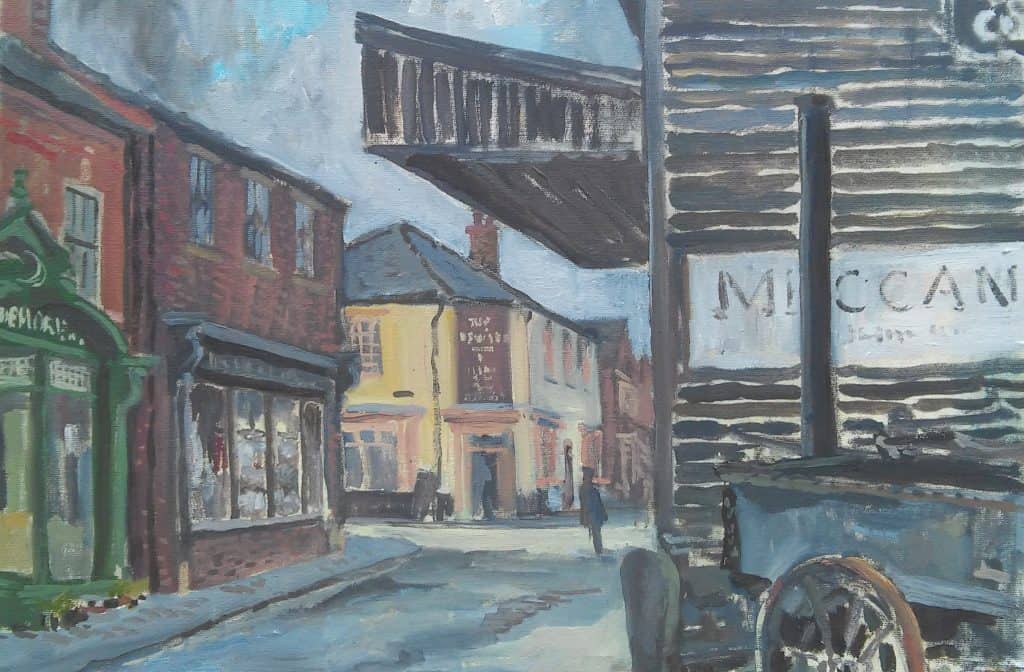
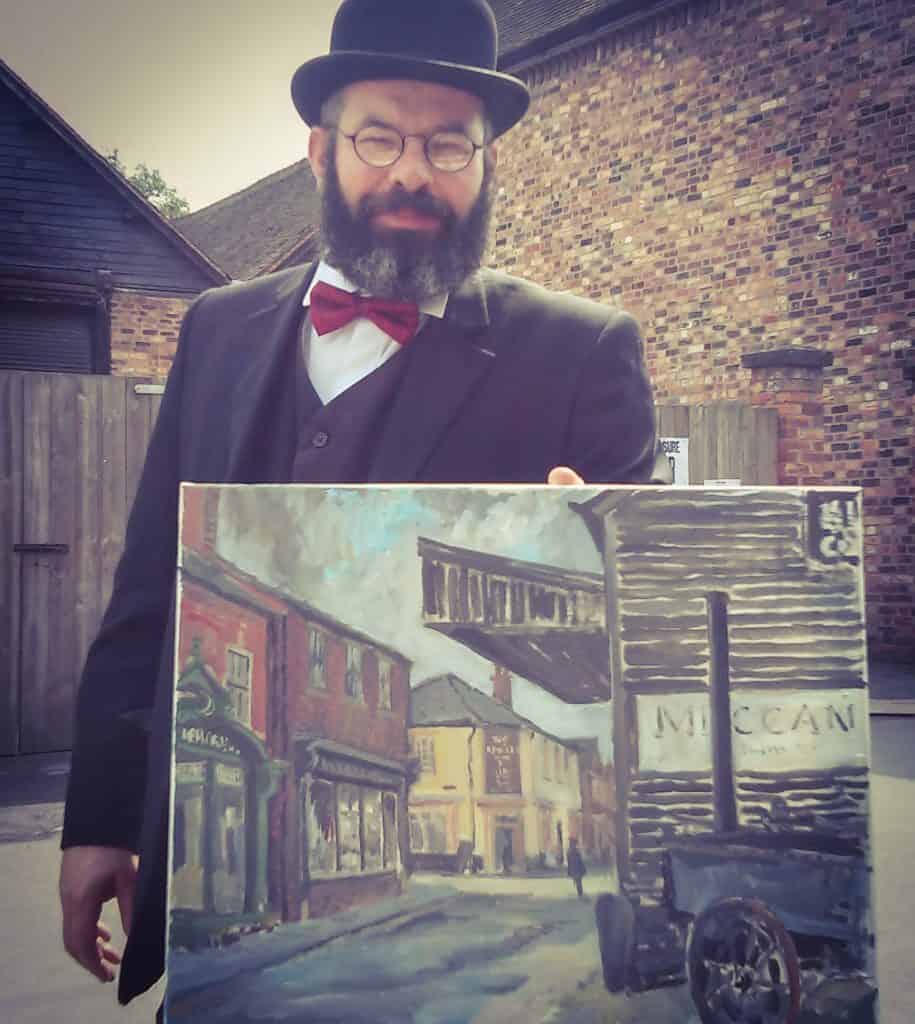
My favourite painting of the week – the street as you first arrive at Blists Hill. It was quickly nabbed by Mr. Bartlett to keep it safe in the bank!
As a gift I was given a “Katie” Victorian rag doll!

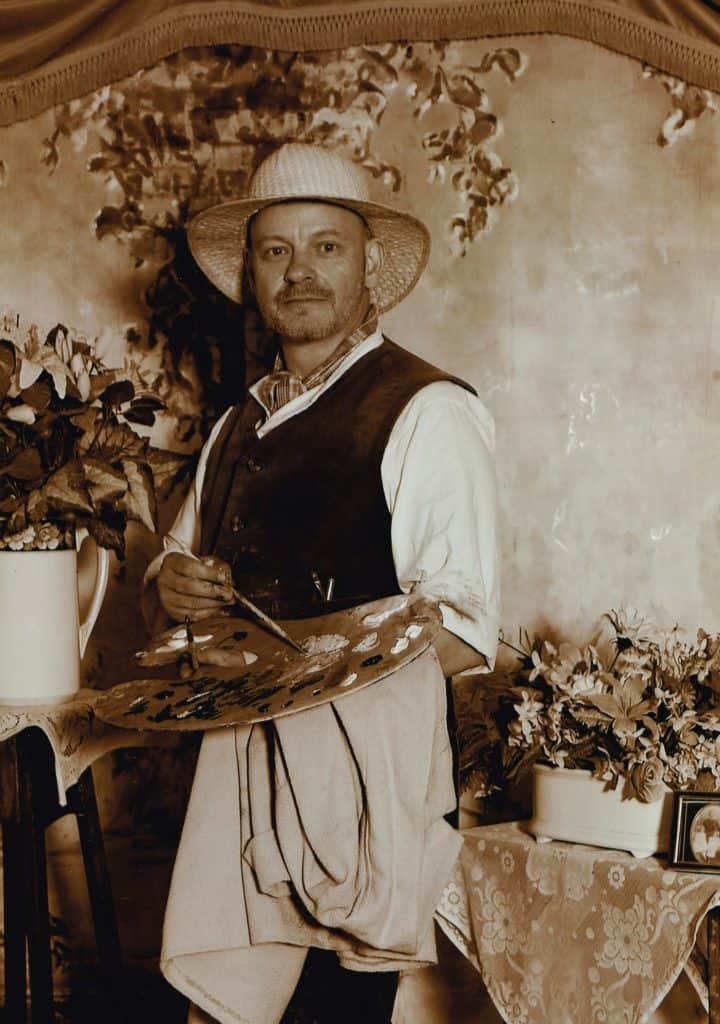
And a Victorian photographic portrait!
All in all it was a wonderful experience. I feel I made rapid progress with the oil paints and will endeavour to continue with them when time allows. And if you have never been to Blists Hill, I cannot recommend it too highly. A wonderful day out and a real thrill to step back in time and discover history coming alive all around you.




Leave a Reply