

Everyone knows that John Constable grew up in Suffolk and that he painted Will Lott’s cottage. There can’t be many people unaware that the whole Stour valley between South Essex and North Suffolk is called Constable Country, and Dedham Mill and surrounding countryside are visited by millions of tourists every year.
As I began work on Katie and the British Artists I knew I would need to return to a place I’d visited a couple times as a child. I grew up in Suffolk myself, albeit in Blundeston at the farthest boundary from Flatford or Dedham. But it was Constable’s example that first set me off across Blundeston marshes with my paints and easel. As my Uncle Richard used to say, “He knew how to make a tree look like a tree”. As a teenage artist, I wanted nothing more.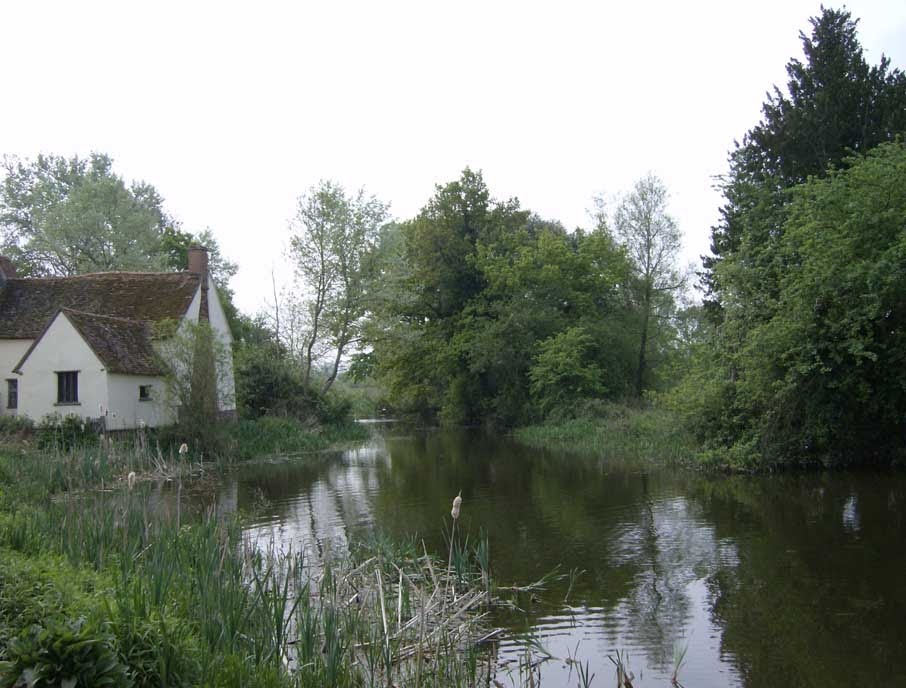
Revisiting Constable Country as an adult was worrying on several counts.
Firstly, I had been warned about crowds so I arrived (with family) very early. But would it be spoiled with cheap tatty tea shops and plastic trinkets?
At it turned out it was unexpectedly beautiful and tranquil, and the tea shops relatively discreet. The view across the river beside the famous cottage is virtually unchanged from when The Hay Wain was painted (in 1821). Only the hay-cart itself was missing. I felt like Katie, as though I had in fact stepped into the painting. It is easy to dismiss The Hay Wain as hackneyed, and Constable as chocolate-boxy. It is true that The Hay Wain features on tea towels and biscuit tins and faux-canvas reproductions; you will see them in every charity shop in England. And yet, standing there on the spot that inspired Constable it seemed to me that there was no other way it could be done. No other way of capturing the still detail of that countryside, with the endless skies and clear light.
But I had already used The Hay Wain anyway, in the very first Katie book, Katie’s Picture Show. This time I intended to use The Cornfield as Constable’s sole contribution to my new book. My problem was that this portrait shaped picture (unusual for Constable) had to extend for a double page spread, which meant adding greatly to the composition.
As Constable was so authentic in terms of capturing the countryside I felt I really needed to do my research and be equally well prepared.

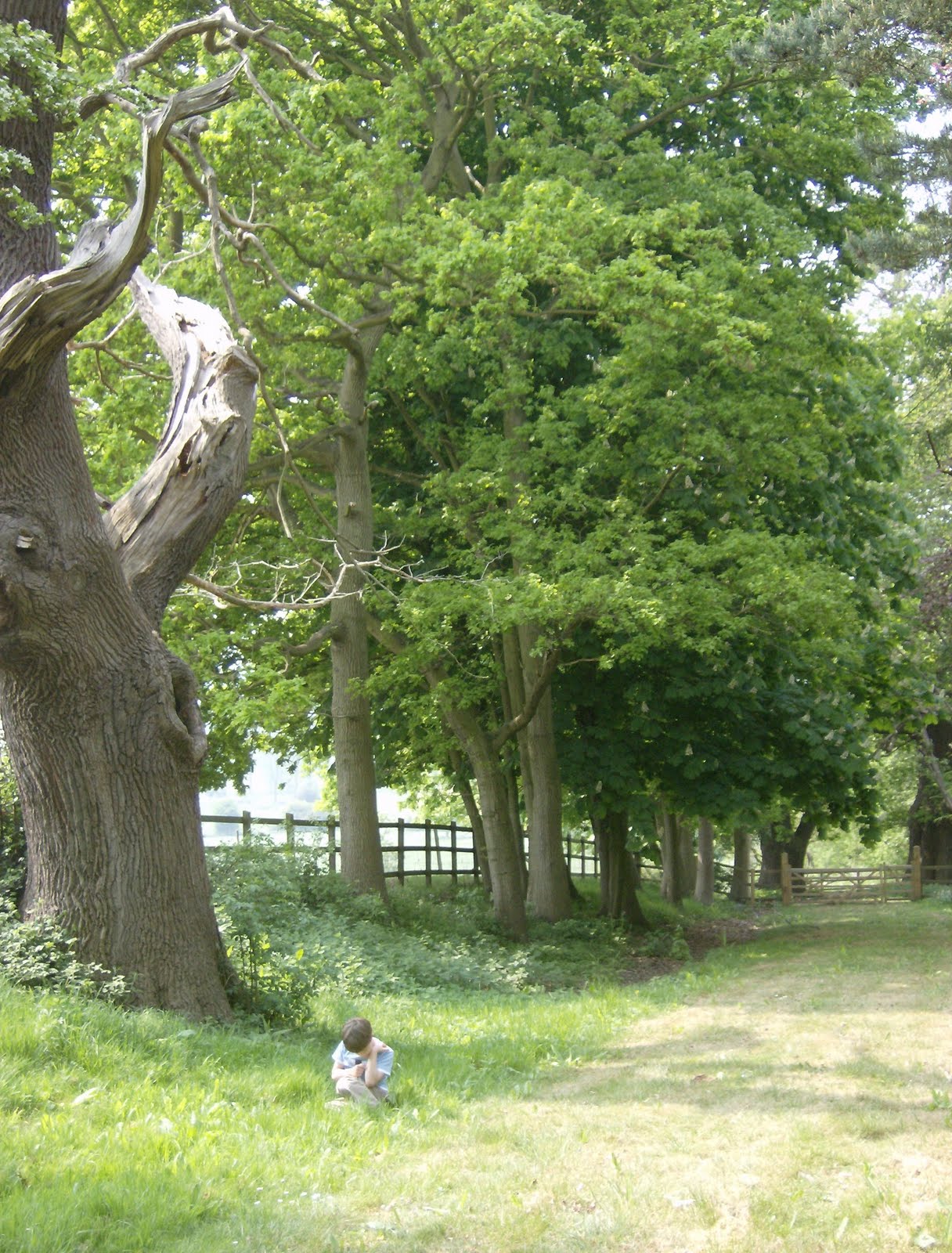
In the little tourist centre a map was offered, with a Constable walk. Until recently I would have been promised the very location where the Cornfield was painted also. For many years it was assumed to be Fenbridge Lane in Flatford. But now the location had become more controversial for just past the turning for Fenbridge Lane is a private farm. Beyond the gate a dead tree. And in wet winters, near the tree a spring is sometimes found to reappear. Could this be where he took inspiration for the dead tree in his painting? Was it possible the same tree still stood 170 years after Constable painted it? Was this the spring the shepherd boy drank from?
In Sherlock Holmes mode (Miss Marple – my wife Mari – at my side) we explored both, and Gabriel provided his interpretation of the Shepherd boy in the original painting (and got stung by nettles in the process).
With either location, extending the painting sideways was a problem . It just didn’t seem to work. Until I realized the Constable had actually made it all up. All the components in that painting were from different view points. The church wasn’t visable from either the Fenbridge lane or the farm-with-a-dead tree. The lay of the land didn’t match. The arrangement of trees did not match. This was very much a composition. And so mine would be too; and it is. 
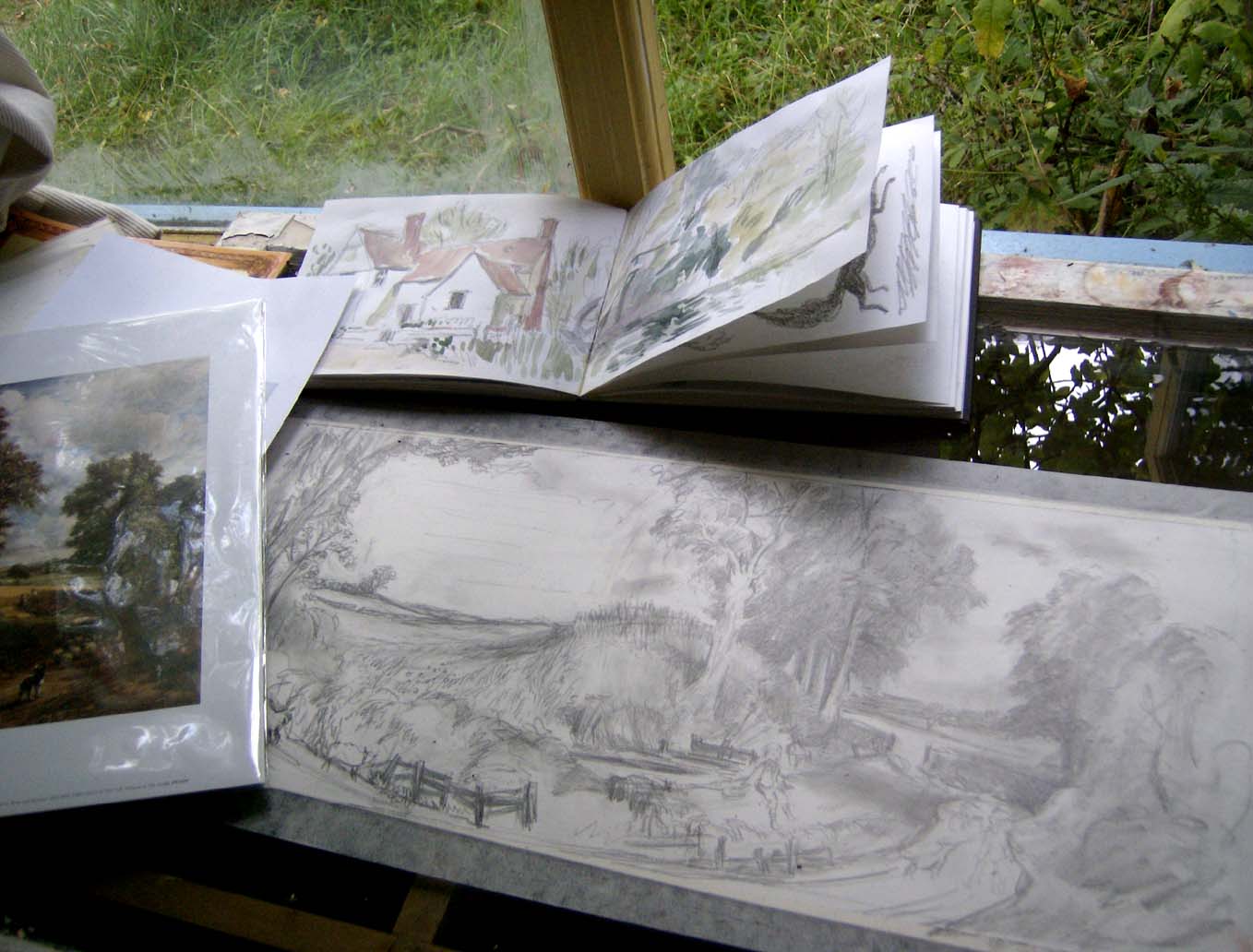
It was nevertheless invaluable to be there and sketch and soak up the atmosphere. It all seeps out into the work.
I came away, more importantly , with renewed respect for Constable and his ability to move a landscape around to create the composition he wanted. Some he found ready made in nature. But he wasn’t a slave to the countryside. Some paintings he assembled himself with such skill and knowledge of the countryside that you simply can’t see the joins.







Leave a Reply