



I am delighted to be able to tell you that the next Ella Bella Ballerina book is to be based on Tchaikovsky’s The Nutcracker. I am so happy about this, it’s the perfect ballet story for Ella Bella to join in with.
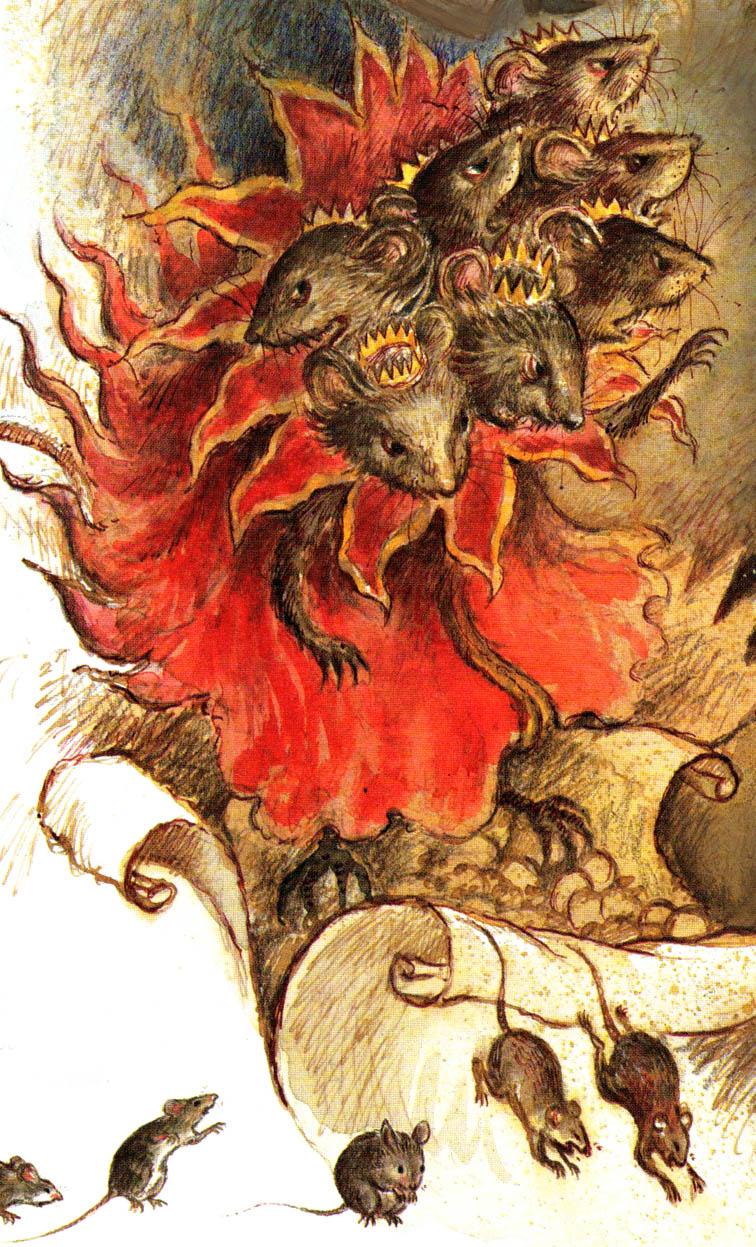
Many years ago I illustrated Hoffmann’s original story, and some of those images are posted here. The book was part of Dorling Kindersley’s “Eyewitness Classics” series, and so the illustrations had to twist and turn into all sorts of unusual shapes, and fit around photographs, text panels and annotations; all very different from the usual picture book. This work is around 12 years old now and I know I’ll approach The Nutcracker quite differently in Ella Bella’s book, with my retro techniques and vintage visions!
In any case, the ballet story is very different in detail and tone to Hoffmann’s original. In the ballet, the heroine is Clara, but in the original story she is Marie. Hoffmann’s story tells us a great deal about what happened before Clara/Marie got given her Nutcracker on Christmas Eve. This involves a Princess Pirlipat who is cursed to become as ugly as a nutcracker when her mother, the Queen, refuses the Queen of the mice the King’s bacon fat (honestly!). The only cure is in a rare nut kernel, which Marie/Clara’s Godfather Drosselmeyir (a royal inventor) searches for. It is his own nephew who cracks the nut and saves Pirlipat. But he accidently treads on the Mouse Queen and is thus cursed to become a Nutcracker himself.
It is some years later that drosselmeir gives Marie his bewitched nephew in the hope she can somehow break the curse. The subsequent story with the King of the Mice lasts many nights, throughout which Marie is ill with a strange fever. It is only at the very end, in an epilogue reminiscent of Beauty and the Beast, that the Nutcracker is transformed back into Drosselmeier junior by Marie’s love. He then takes the Marie off to be his bride and together they become the King and Queen of the kingdom of sweets.
In the ballet we know nothing of Princess Pirlipat, and it is the Sugar Plum Fairy who dances with the prince (who is redeemed in Clara’s living room, under the Christmas tree). At the end of the ballet, the whole story is usually interpreted as Clara’s dream, and the epilogue in which she (as Marie) marries the prince is avoided, keeping the story firmly in childhood.
I don’t yet know the schedule, but it is likely that this will publish in time for Christmas 2011.
Already visions of sugar plums are dancing in my head (to quote The Night Before Christmas) and I long to get started. But first I must get on with Katie In Scotland, about which you can read by clicking HERE.




Leave a Reply