
Amongst Russian 19th Century composers, Mussorgsky is held in particular high esteem. In his short life he achieved extraordinary things, despite limited time (he was first in the army, then a civil servant), poor health (depression and alcoholism) and a lack of a complete formal musical education (although this may have been an advantage in some respects!). Through all of this, what shines through is the work of an original genius. Indeed the slightly cliched image of a tortured genius could have been made up just for Modest Mussorgsky.

The man is something of an enigma. His private life is largely private, and his themes in music are powerful, political, disturbing and bold, but there is limited material (few letters etc.) to suggest why such sweepingly grand subjects appealed to him. Not for him, the fairy tales of Rimsky-Korsakov. Nor the sentiment and romance of Tchaikovsky. Mussorgsky wrote about the whole of Russia, the starving people, the dissolute Tsars, the corruption and greed, the tragedy and suffering. And he did so in epic terms, and with a broad brush. Even songs were collected under such titles as Songs and Dances of Death and Without Sunlight. His music is described often as earthy and ahead of it’s time. And it still sounds startlingly audacious today.

(Set for Boris Godunov by Alexander Golovin)
One of the things that fascinate people the most is the fact that he died leaving many works incomplete. Nikolai Rimsky-Korsakov has been much maligned for completing and orchestrating them, most unfairly I think. The two men composed together at the same piano, and Rimsky knew Mussorgsky’s plans inside out. So while Rimsky deliberately toned down some of Mussorgsky’s more unusual ideas, he did so with the purpose of making this strange and dangerous music more easily understood by conservative audiences, and he destroyed nothing, writing that he sincerely hoped his versions would one day step back to allow Mussorgsky’s originals their rightful place. And that is what has happened.
Funnily enough, the one work Rimsky never touched is Pictures at an Exhibition. This suite of ten curious pictures (inspired by artist Victor Hartmann) works so perfectly for solo piano, it needs nothing added. From old castles to Baba-Yaga’s house on chicken legs, it is brimming with wit and invention. And yet dozens of composers have chosen to create orchestral arrangements, most famously Maurice Ravel, whose version is now the most heard. Personally, I find it far more intrusive than anything Rimsky-Korsakov arranged, but that’s a subjective view. What I can say is that the arrangement for brass by Elgar Howarth is, to my ears, far closer to the spirit of what Mussorgsky wrote. Indeed it is glorious and I am entirely in love with it!
It is very rarely performed, but you can hear it LIVE on July 11th at the Cheltenham Music Festival. Having shared the stage for a concert for schools last week, I can see why The Flowers Band are one the world’s greatest brass ensembles – they were jaw droopingly sensational!
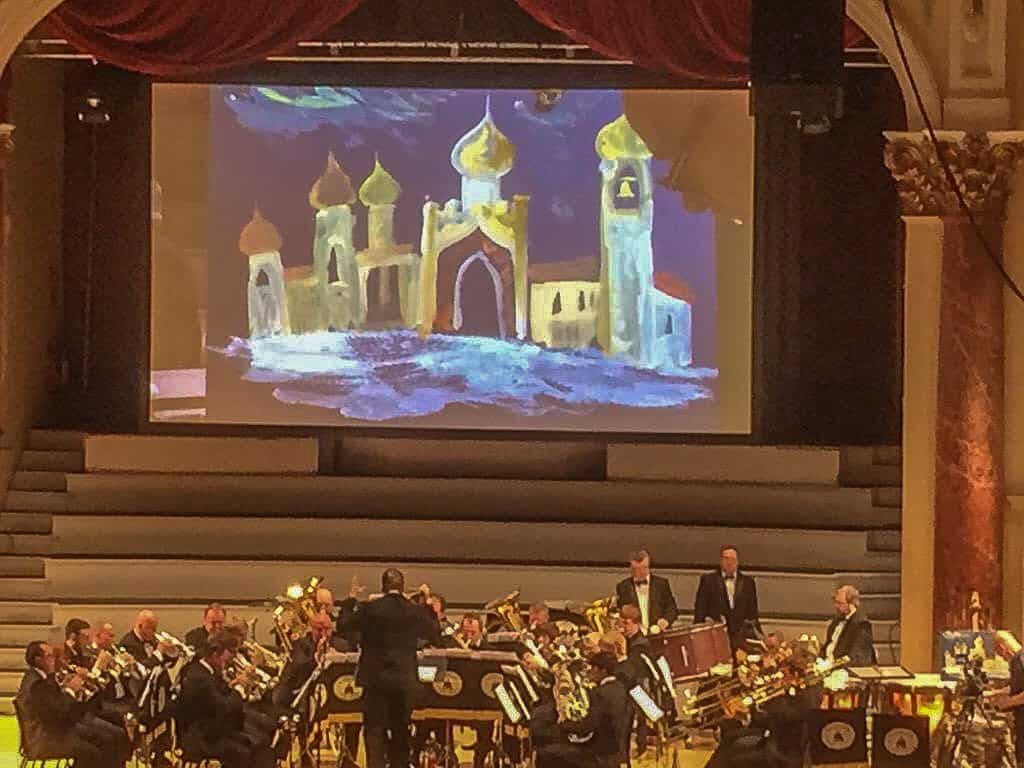
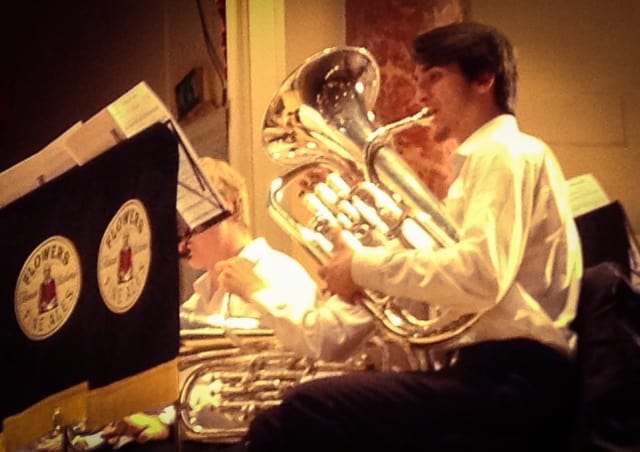
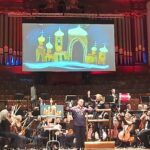
As usual, I was painting along live on stage, and will be doing so again on July 11th. Here is some of my practise work…
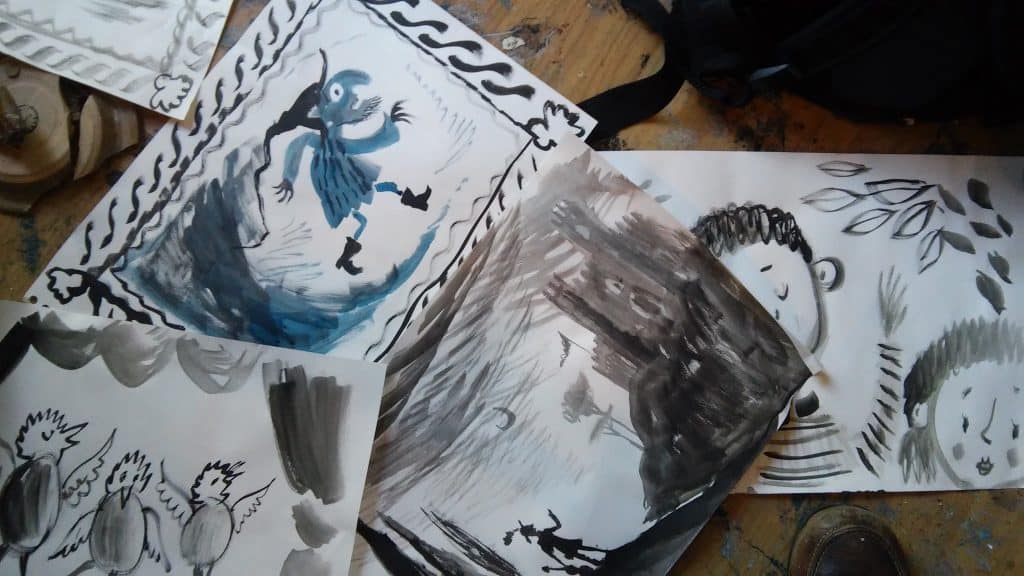
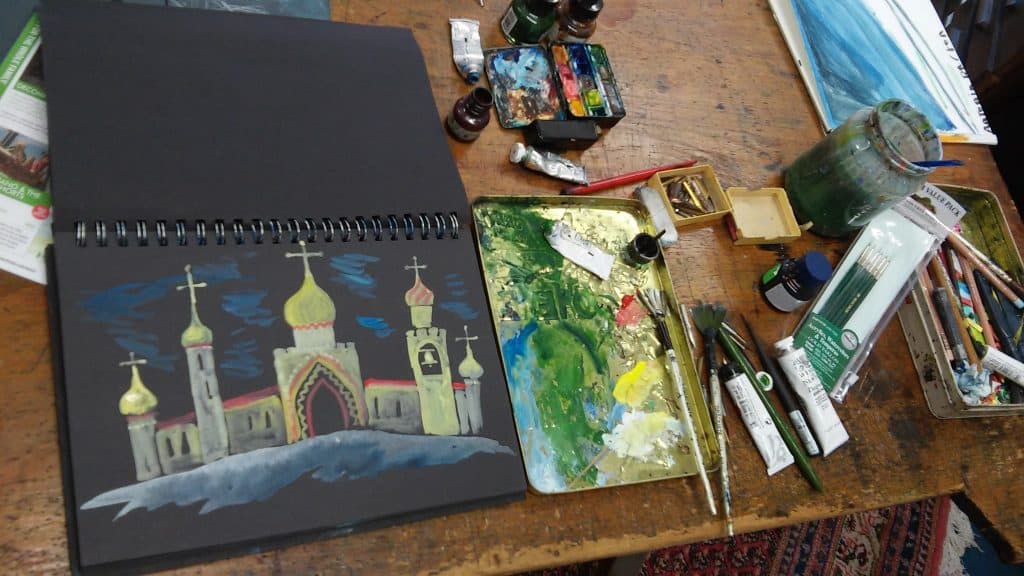
Many of Hartmann’s original pictures are lost, but even those remaining are unusual choices for musical inspiration. My own interpretations are absolutely in line with the original ideas, but are obviously carefully planned to fit the time frame: some “pictures” last little more than one minute – Limoge Market being my particular Achilles Heel!
The school children loved The Flowers Band and I am so excited to be joining them again for this next concert, which also includes Mars from Holst’s Planets and other gems. They will blow the very roof off Cheltenham Town Hall! I cannot urge YOU strongly enough to come. If you want to get children excited about music – this is simply unmissable.
Click here for information and to book: http://www.cheltenhamfestivals.com/music/whats-on/2015/james-mayhew-paints-mussorgskys-pictures/



Leave a Reply